Artemis Missions Explained: What Happens on Each Flight
Artemis is not one mission. It is a queue of them, each with a different job, and each built so that the things learned on one flight feed directly into the next. NASA runs the programme with partners including ESA, JAXA and the Canadian Space Agency, and the hardware is genuinely new: the Space Launch System rocket, the Orion spacecraft, and a lunar lander that will be a SpaceX Starship on the first landing attempt. Here is what each flight is actually for.
Artemis I: The Uncrewed Shakedown
Artemis I launched on 16 November 2022 from Kennedy Space Center’s Launch Complex 39B, after a summer of scrubbed attempts and a hurricane. No crew. Just Orion, an SLS in its Block 1 configuration, and a payload bay full of small CubeSats.
The flight lasted 25 and a half days. Orion entered a distant retrograde orbit around the Moon — travelling in the opposite direction to the Moon’s own rotation — and reached roughly 432,000 km from Earth, further than any spacecraft built for humans had gone before. It splashed down in the Pacific on 11 December.
What it was really testing
- The SLS core stage, twin solid boosters and upper stage on a real ascent.
- Orion’s heat shield at lunar reentry speed, close to 40,000 km/h.
- Life support, avionics, power and communications in deep space.
- Recovery of the capsule by ship, with crew procedures rehearsed around it.
The heat shield came back with more char loss than engineers expected. An investigation traced it to the Avcoat material and the way Orion’s skip reentry let heat build inside the shield’s pores. NASA changed the reentry trajectory for Artemis II and adjusted how the shield is manufactured. That single finding is the clearest argument for flying an uncrewed test first.
Artemis II: Four People Around the Moon
Artemis II carries Reid Wiseman, Victor Glover, Christina Koch and the Canadian Space Agency’s Jeremy Hansen on roughly a ten-day trip. They will not land. They will not dock with a lander. The point is to fly Orion with people aboard, on a free-return trajectory that swings around the far side of the Moon and comes home under gravity’s own steering.
Expect the crew to spend much of the flight as test subjects as well as pilots: checking how the cabin behaves, how the spacecraft handles with hands on the controls, and whether life support holds up over days rather than hours. Koch and Glover would be the first woman and first Black astronaut on a lunar mission, and Hansen the first non-American.
Current targeting puts Artemis II in 2026, with Artemis III no earlier than 2027. Both dates have moved several times already and could move again.
Artemis III: The First Landing
Artemis III is the one most people mean when they talk about returning to the Moon. The plan is a landing near the lunar south pole, chosen for the water ice locked in permanently shadowed craters — ice that could eventually become drinking water, oxygen and rocket propellant.
The sequence runs roughly like this:
- SLS launches Orion and its four-person crew into lunar orbit.
- A SpaceX Starship Human Landing System, already waiting in lunar orbit, meets them.
- Two astronauts transfer to the lander and descend to the south polar region.
- They spend about a week on the surface doing science, then lift off and rejoin Orion.
- Orion brings all four home.
Two things make this harder than Apollo. Starship must be refuelled in Earth orbit by tanker flights before it can head for the Moon — a propellant transfer not yet demonstrated at this scale. And the low sun angle at the south pole means long shadows and bitter cold, which shapes everything from power supply to spacesuit design.
Artemis IV and Gateway: A Station in Lunar Orbit
From the fourth flight, the architecture changes. Artemis IV is planned to deliver the I-HAB habitat module to Gateway, a small station in a near-rectilinear halo orbit — a long, looping path that keeps it close to the Moon at one end and within reach of Earth at the other.
Gateway is not a place to live permanently. It is a staging post, a lab, and somewhere to practise the operations a Mars mission would need. ESA is contributing the ESPRIT refuelling and communications module; Canada is supplying Canadarm3. Artemis IV would also need the upgraded SLS Block 1B with its more powerful Exploration Upper Stage, which is still in development.
Artemis V and Beyond: Landers, Rovers and a Base
Beyond Artemis III, NASA has contracted a second lander from Blue Origin — Blue Moon — for Artemis V, giving the programme more than one route to the surface. Later flights look towards a pressurised rover that astronauts can live in for days, surface habitats, and a base camp concept near the south pole.
The Moon is also being explored between crewed flights. NASA’s Commercial Lunar Payload Services programme sends small robotic landers to the surface to test instruments, drill for volatiles and map terrain that crews will later cross. Some of those landers have failed, some have succeeded, and the data feeds into planning either way.
How to Follow the Programme
Artemis schedules are living documents. Treat any date more than a year out as provisional, and watch for these signals instead:
- Wet dress rehearsals and tanking tests, usually weeks before a launch attempt.
- Flight readiness reviews — once NASA formally signs off, the date is close.
- Starship flight tests, since orbital propellant transfer gates Artemis III.
- Gateway module deliveries, which gate Artemis IV.
The NASA Artemis blog carries the primary updates, and the agency streams launches and key tests. For deeper context, read the mission press kits: they list timelines, orbit details and experiment manifests, which are far more useful than launch-day commentary.
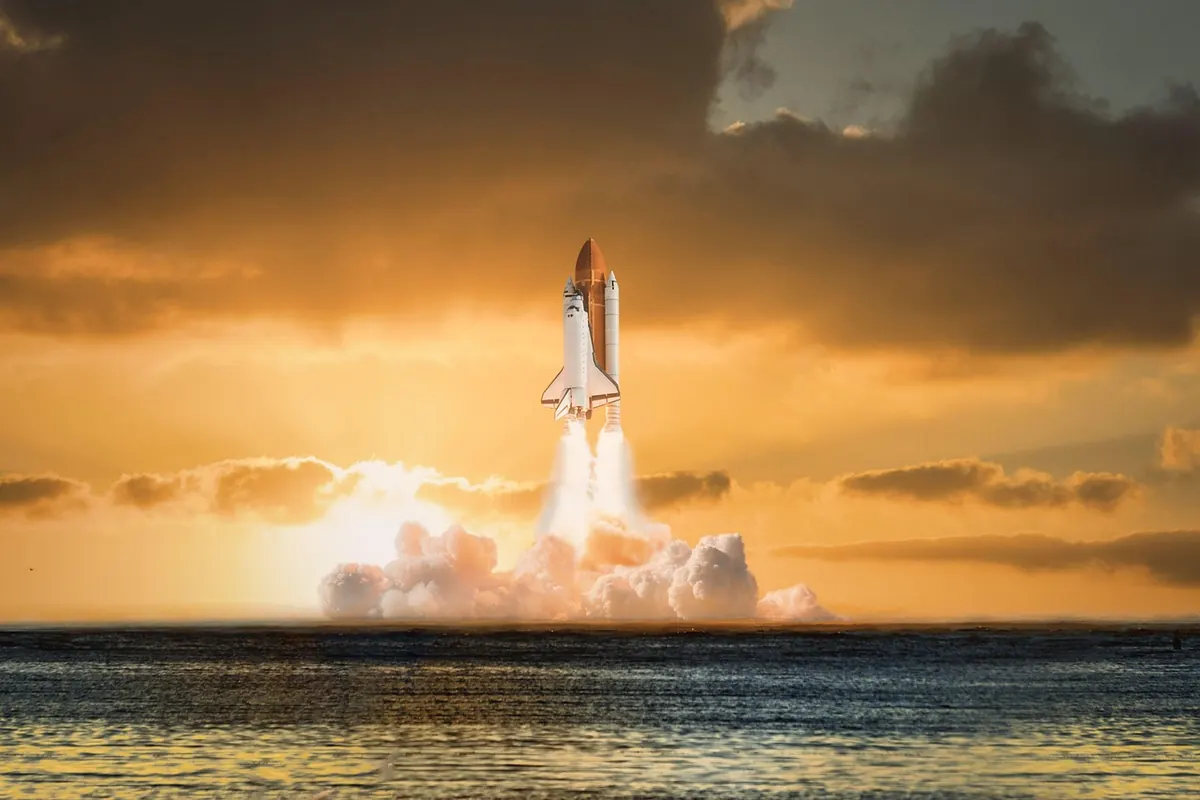
Photo: DiceME / Pixabay
You Might Also Like
A plain-English guide to astronomical units, light-years and parsecs, with everyday scale tricks that make the huge numbers behind space stories easy to picture.
A practical guide to telling the ISS, Starlink trains and sudden satellite flares apart using timing, direction, brightness and simple tracking tools.